After 7 years in the corporate world, a few recent tough life events and subsequent reflections, I decided to take a few months off work to swap the office 9-5 for an adventure around the world. A few weeks into this already fascinating journey and I’m feeling inspired to write down and share some reflections and what I’ve learnt.
I decided to start my trip in Africa, a continent I had always wanted to explore but hadn’t yet had the chance. I found a volunteering programme in a small town called Busua in Ghana, a few hours from the capital Accra, where I spent 2 weeks volunteering in a school. It was an amazing and inspiring experience, with a few challenging moments.
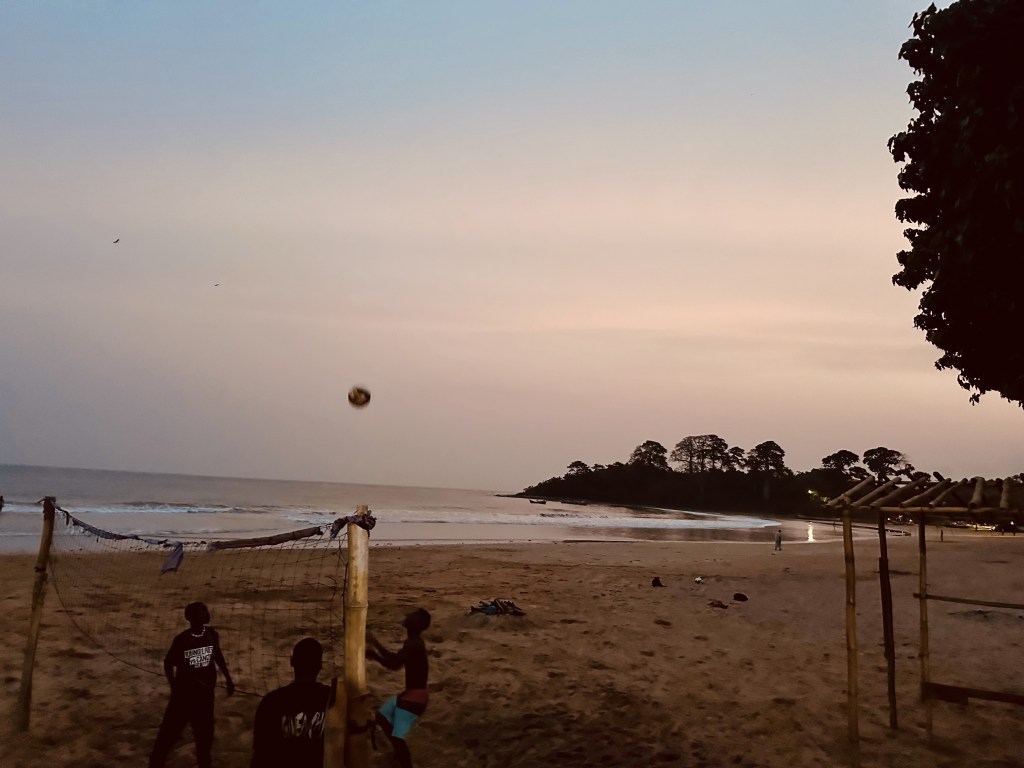
Busua is an incredible little town set right on a stunning beach lined with volleyball courts, surf shops and beach bars. From the moment we arrived the locals were really warm and welcoming and I instantly loved the vibe – relaxed and friendly with music playing around every corner. It is the most close-knit community I have ever encountered, everyone knows everyone and they all greet each other warmly in the street.
It was a refreshing lifestyle change waking up early for sunrise walks along the beach before heading to the school. Each evening we went back to the beach to watch the amazing local surfers, try to surf ourselves (far from amazing in my case) and/or play volleyball or football before unwinding with a Club beer and a game of pool, a quiz, karaoke, a game or some painting. I could get used to this routine.
Volunteering at the school was a great, rewarding and challenging experience. The kids are really sweet – they all want to hold your hand, hug you and learn your name, then anywhere you go in town at any time of day or night, you are almost guaranteed to hear at least one of them calling your name with a big smile and it will melt your heart.
I thought day 1 at the school would mostly involve observing so it was daunting to be handed a whiteboard pen and told to get on with it because the teacher wasn’t coming. With a grand total of zero teaching experience and zero resources due to a locked cupboard, I had to think on my feet. The team maths competition went relatively well considering – most were engaged and seemed to learn something which made me feel proud. Spelling and drawing didn’t go quite so smoothly – picture 30 small children fighting over 1 board marker which intermittently stopped working – but I left for the day with a sense of accomplishment (and exhaustion).
I was relieved to find that the teacher was back the next day so my role became observer and marker of work for the next few days, which was far more manageable and the kids were better behaved. Until a few days later, when all of the teachers had a meeting so I had 2 full classes to look after on my own. Trying to control 60 kids aged 6-8 in a very hot classroom without enough seats or a fan is far from an easy task.
After trying several approaches to calm them down with limited success, I made a tactical choice to focus on shutting down the more aggressive behaviour (eg. slapping each other with belts) with the sternest voice I could muster, and let the milder chaos slide. However I soon learned that this is not the disciplinary method of choice in Ghana.
We were told at the start that caning is part of the culture so we shouldn’t get upset by it, but that’s easier said than done – the first time I saw the entire class of 6-7 year olds being caned shortly after the above was hard to watch and understand and it didn’t get easier. It was sad to learn that some kids refuse to go to school because they fear the cane and miss out on education because of it. But the teachers here have a really difficult and exhausting job trying to control and teach so many children in hot classrooms, on their own without teaching assistants or support, and the cane seemed to be the only way to get things under control.
It was also upsetting to see first-hand the effects of lacking access to clean water and healthcare. In 30 degree heat I was usually carrying a water bottle to stay hydrated and often children would run up and plead for it, so I usually ended up giving it away before lunchtime. There was no access to clean water at the school despite the heat and I saw a handful of kids get told to leave and walk home because they were unwell, presumably with dehydration.
Every Thursday the volunteers help at a wound clinic together with our local hosts to clean the kids’ wounds, which ranged from tiny grazes to pretty deep cuts. It became clear that this is sometimes their only option, which meant the cuts were often days old and by now already infected. The hospital volunteers said many of them needed antibiotics but there was nothing we could do. Hearing this and the other stories from the hospital volunteers about avoidable injuries, illnesses and deaths was a stark reminder not to take access to healthcare for granted at home.
My main feeling from the first two weeks of this adventure is gratefulness. I’m grateful to the people of Busua, especially our local hosts, for welcoming us with open arms and for inspiring me with their warmth, humour and attitude to life. I’m grateful for access to clean water, healthcare and education, and for the opportunity to go on this amazing adventure for which I am extremely fortunate.
Next stop is Kenya – I’m in Watamu supporting a sea turtle conservation project for a couple of weeks. It’s a totally different, amazing project, with its own challenges and lots of learnings, which I’ll write about next.

 aroundtheworldinkatydays.blog